
Why Artisan Bread Doesn't Stay Soft Forever

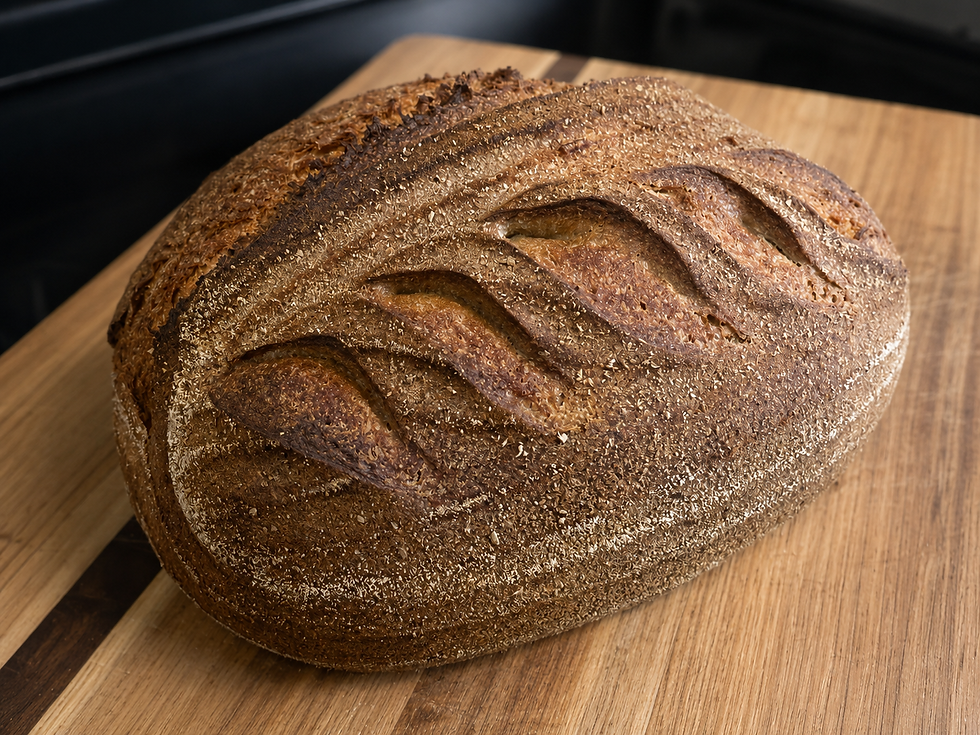
One of the most common questions artisan bakers hear is surprisingly simple:
"Why doesn't your bread stay soft as long as store-bought bread?"
It's a fair question.
Many people are accustomed to sandwich bread that remains soft for days—or even weeks—after purchase. When they bring home a freshly baked artisan loaf, they sometimes notice that it begins changing within a day or two.
The crust softens.
The crumb becomes firmer.
The bread feels different.
For artisan bakers, this isn't a flaw. It It's a sign that the bread is real.
Bread Is Meant to Change
Fresh bread is a living food.
Not living in the biological sense, but in the sense that it continues evolving after it leaves the oven.
As bread cools, moisture redistributes throughout the loaf.
As days pass, the starches within the crumb gradually reorganize themselves through a process known as retrogradation.
This is what we commonly call staling. Contrary to popular belief, bread does not become stale because it loses all of its moisture.
The process is far more complex than simply drying out.
The structure of the bread itself is changing.
Why Grocery Store Bread Behaves Differently
Commercial bread is often designed with shelf life as a primary goal.
Large manufacturers may use combinations of:
Dough conditioners
Emulsifiers
Preservatives
Enzymes
Specialized processing techniques
These tools help maintain softness and consistency over extended periods. For large-scale production and distribution, this makes perfect sense.
A loaf that must travel through warehouses, distribution centers, and store shelves needs to remain stable for longer periods.
Artisan bakers typically pursue a different objective. Instead of maximizing shelf life, they focus on flavor, texture, and craftsmanship.
The Role of Fresh Milling
Fresh-milled bread often behaves differently than highly processed commercial bread. Whole grain flour contains components that contribute flavor, aroma, and character to the finished loaf.
These same characteristics can create a bread experience that feels more dynamic and less standardized than industrial products.
Rather than producing a loaf that tastes exactly the same on day seven as it did on day one, artisan bread often evolves over time.
Fermentation Matters Too
Long fermentation contributes many wonderful qualities to bread.
It develops flavor.
It improves aroma.
It creates structure.
But fermentation does not stop the natural aging process of bread. Even the most carefully fermented loaf will gradually change after baking.
This is not evidence that something has gone wrong.
It is simply part of the lifecycle of bread.
Stale Does Not Mean Bad
One of the great misconceptions about bread is that stale bread has no value.
Historically, bakers and cooks understood exactly the opposite.
Day-old bread became:
Toast
Croutons
Bread pudding
Stuffing
Breadcrumbs
Panzanella
Many traditional recipes were developed specifically to give bread a second life.
A loaf that is no longer ideal for sandwiches may be perfect for another purpose.
How to Keep Artisan Bread at Its Best
A few simple practices can help maximize freshness:
Store It at Room Temperature
A paper bag, bread box, or loosely wrapped cloth works well for most artisan loaves.
Avoid Refrigeration
Refrigeration often accelerates staling.
Freeze for Longer Storage
If you won't finish a loaf within a few days, freezing is usually the best option.
Refresh Before Serving
A few minutes in a warm oven can revive crust and aroma remarkably well.
Bread Was Never Meant to Last Forever
For most of history, bread was baked regularly and enjoyed relatively quickly. The expectation that bread should remain unchanged for weeks is a relatively modern one.
Artisan bread embraces a different philosophy.
It prioritizes flavor over shelf life.
Character over uniformity.
Craftsmanship over convenience.
That means the loaf you bring home today may not be exactly the same loaf you enjoy tomorrow.
And that's part of what makes it special.
At Manna Mill Bread Co., we believe great bread should reflect the grain, the fermentation, and the baker's craft. Sometimes that means accepting that real bread changes over time.
In our view, that's not a weakness.
It's one of the things that makes artisan bread worth baking.
To learn more about the craft behind our bread, explore our related articles:
Because great bread isn't designed to sit on a shelf. It's designed to be enjoyed.


Comments