
Why Fermentation Matters In Bread

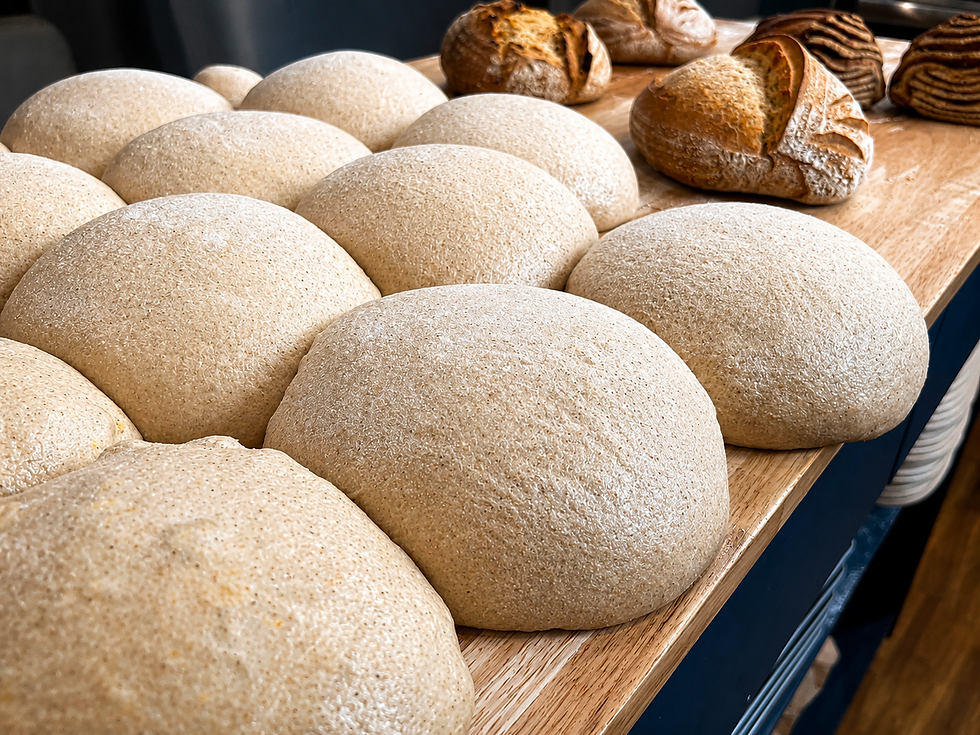
When most people think about bread, they think about ingredients.
Flour. Water. Salt. Yeast.
While ingredients are important, they are only part of the story. What often separates an ordinary loaf from an exceptional one is time.
More specifically, fermentation.
Fermentation is one of the oldest and most important processes in bread making. Long before ovens, mixers, and commercial yeast existed, bakers relied on fermentation to transform simple ingredients into flavorful, nourishing bread.
Today, it remains one of the defining characteristics of great baking.
What Is Fermentation?
At its simplest, fermentation is the process by which yeast and beneficial microorganisms consume sugars and produce carbon dioxide, organic acids, alcohols, and hundreds of flavor compounds.
The carbon dioxide helps bread rise.
The flavor compounds help bread taste like bread.
Without fermentation, dough would simply be a mixture of flour and water. Fermentation is what brings it to life.
Fermentation Does More Than Create Rise
Many people assume fermentation exists solely to make bread rise.
In reality, rising is only one of its functions.
As dough ferments, a remarkable series of changes takes place. The yeast produces carbon dioxide, creating the structure that allows bread to expand in the oven. Enzymes begin breaking down starches into simpler sugars. Organic acids develop. Proteins change. Flavor compounds accumulate.
The dough becomes more extensible, more aromatic, and more complex.
The longer a baker works with dough, the more obvious these changes become.
A dough that has been properly fermented feels different, smells different, and behaves differently than one that has not.
Flavor Takes Time
One of the easiest ways to understand fermentation is to think about other foods.
A stew tastes different after simmering for several hours.
A slow-roasted piece of meat develops flavors that cannot be achieved in twenty minutes.
Coffee, wine, cheese, chocolate, and cured meats all rely on time to develop complexity.
Bread is no different.
Freshly mixed dough has very little aroma.
Properly fermented dough develops layers of flavor that cannot be rushed. This is one reason artisan bakers are often willing to extend fermentation through overnight refrigeration or carefully managed production schedules.
The goal is not simply to make the dough rise.
The goal is to allow flavor to develop.
Fermentation Shapes Texture
Fermentation influences far more than flavor.
It also plays a major role in texture.
During fermentation, gluten develops and organizes into a network capable of trapping gas. This network creates the internal structure of the loaf and contributes to the final crumb.
Insufficient fermentation often produces bread that feels dense, tight, or underdeveloped. Excessive fermentation can weaken the dough and reduce structure.
The baker's job is to find the balance point where strength, flavor, and extensibility come together.
This balance is one of the reasons bread making remains both a science and an art.
Every Dough Ferments Differently
Not all doughs ferment at the same rate.
Several factors influence fermentation:
Temperature
Hydration
Flour type
Whole grain percentage
Dough strength
Yeast quantity
Preferments or sourdough culture
Freshly milled whole grain doughs often behave differently than doughs made with highly refined flour.
Ancient grains behave differently than modern wheat.
A baker who understands fermentation learns to observe the dough rather than simply watch the clock.
The dough ultimately determines when it is ready.
Why Artisan Bakers Value Long Fermentation
Modern commercial baking often prioritizes speed and consistency.
There is nothing inherently wrong with that approach. It allows bakeries to produce large quantities of bread efficiently.
Artisan baking often pursues a different objective. Rather than asking, "How quickly can this bread be made?"
The question becomes:
"How good can this bread become?"
Longer fermentation provides opportunities for greater flavor development and more complex character.
It requires planning and patience, but many bakers believe the results justify the effort.
Fermentation and Fresh-Milled Flour
At Manna Mill Bread Co., fermentation and fresh milling work together.
Freshly milled grain brings its own unique flavors, aromas, and characteristics to the dough.
Fermentation helps unlock and develop those characteristics. A carefully selected grain blend can provide remarkable potential, but fermentation is what allows that potential to express itself fully in the finished loaf.
The grain provides the foundation.
Fermentation helps tell the story.
Why Great Bread Cannot Be Rushed
The most important lesson fermentation teaches is patience.
Bread is not merely assembled.
It is developed.
Time allows grain, water, yeast, and salt to become something greater than the sum of their parts. This transformation is what has fascinated bakers for thousands of years. And it remains one of the reasons artisan bread continues to captivate people today.
Because while ingredients matter, great bread is ultimately the result of what happens between mixing and baking.
That is where fermentation works its magic.
To learn more about the grains and processes behind our bread, explore our related articles:
Because every great loaf begins with grain, but it becomes bread through time.


Comments